
 Heart and Soul Series
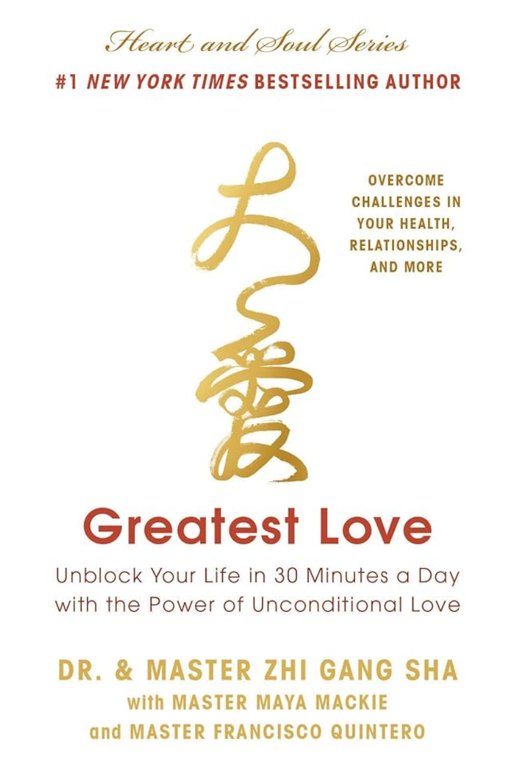
Greatest Love
Unblock Your Life in 30 Minutes a Day with the Power of Unconditional Love
What’s inside: 10 things to take away →
Download the free PDF ↓PDF · 0.7 MB · Also on Master Sha’s official app →
Steady, daily practice is where healing grows. The community meets online every day. Join whichever sessions fit your day — whether you are brand new or have practiced for years.

All times are Manila time (Philippine Time, UTC+8), as of Monday, November 2, 2026. No sign-up needed: just join. Questions? Contact Dr. Pauline at 0915 973 3111.

Build a strong foundation for energy, stamina, vitality and immunity. Teacher Henderson joins on Thursdays and Fridays.
Meeting ID 886 3402 7915 · Passcode 007880
Join on Zoom →
Our evening service for humanity and Mother Earth: singing Master Sha’s Love Peace Harmony song together, ten years and counting. Sing along in your language ↓
Meeting ID 850 1849 8431 · Passcode kapayapaan
Join on Zoom →
With Teacher Henderson, for Tao Hands practitioners and the Love Peace Harmony community. Bring your burning questions.
Meeting ID 889 4153 1876
Join on Zoom →
Teacher Henderson chants live on Facebook with students around the world. Watch and chant along.
Watch on Facebook →A short practice done every day does more than a long one done now and then.
The group holds you on the days you would otherwise skip.
A daily rhythm helps you get the most from the workshop.
Practice that heals you also blesses the people around you.
Between group sessions, practitioners follow a simple daily flow. The free Tao Hands Daily app guides you through each step, with the full script on screen.

Begin with a short, respectful prayer or invocation, and set your intention.

Get ready to give and receive healing: open your healing channel.

Body, heart, mind, relationships, home and life.

Forgiveness, gratitude, soul language and silence.

Close with “Hao, hao, hao” (Mandarin Chinese for “good, perfect, healthy”) and “Thank you, thank you, thank you.”
 Forgiveness
In Tao teaching, forgiveness is not an add-on. It is a foundational practice for softening the heart and releasing what blocks healing and growth. A few minutes a day is enough to begin.
 The Ten Da
Love, forgiveness, compassion, light, humility, harmony, flourishing, gratitude, service and enlightenment — the qualities the practice gradually brings into daily life.
Source: drsha.com, “What are the Ten Da”.
Our evening service sings Master Sha’s Love Peace Harmony song together. Here it is in Soul Language and in many of the languages of the Philippines, as our community sings it. Pick yours.
Lu La-a Lu La Li
Lu La-a Lu La La Li
Lu La-a Lu La-a Li Lu La
Lu La-a Li Lu La
Lu La-a Li Lu La
Mahal kong puso’t kaluluwa
Mahal kong sangkatauhan
Pagsamahin puso’t kaluluwa
Pagibig kapayapaan harmoniya
Pagibig kapayapaan harmoniya
Gihigugma ko ang kasingkasing ug kalag
Gihigugma ko ang tanang katawhan
Hiusahon ang kasingkasing ug kalag
Gugma kalinaw panag-uyon
Gugma kalinaw panag-uyon
Ichadao a tawul kano pahad
Ichadao atavu tawo tawo
Payasahen tawol as kano pahad
Adao maradinep kaydamnayan
Adao maradinep kaydamnayan.
Laylaydek nan pusok ya leng-ag ko
Laylaydek nan menkapa
Amungen tako nan puso ya leng-ag
Layad talna ya panag-es-esa
Layad talna ya panag-es-esa
Ta ama io mi corazon y alma
Ta ama con todo mga hente
Man junto corazon y alma
Amor, paz y harmonia
Amor, paz y harmonia
Hinigugma ko an akon kasingkasing ngan kalag
Hinigugma ko an ngatanan nga katawhan
Upod an kasingkasing ngan kalag
Gugma kalinaw ngan pagkaurusa
Gugma kalinaw ngan pagkaurusa
Ayayatek ’toy pusok ken kararuak
Ayayatek amin nga sangkatauan
Pagmaymaysaen dagiti puso ken kararua
Ayat kapya panagtutunos
Ayat kapya panagtutunos
Moot kong puso asin kalag
Moot ko an bilog na katauhan
Pagsaroon mga puso asin kalag
Pagkamoot katoninongan harmoniya
Pagkamoot katoninongan harmoniya
Palangga ko ang akon tagipusuon kag kalag
Palangga ko ang tanan nga katawhan
Hugpungon mga tagipusuon kag mga kalag
Paghigugma paghidait kag paghiliusa
Paghigugma paghidait kag paghiliusa
I love my heart and soul
I love all humanity
Join hearts and souls together
Love peace and harmony
Love peace and harmony
Wo ai wo xin he ling
Wo ai quan ren lei
Wan ling rong he mu shi sheng
Xiang ai ping an he xie
Xiang ai ping an he xie
Song by Dr. and Master Zhi Gang Sha. Translations shared by our community. The Love Peace Harmony Foundation offers the song and a free recording at lovepeaceharmony.org.
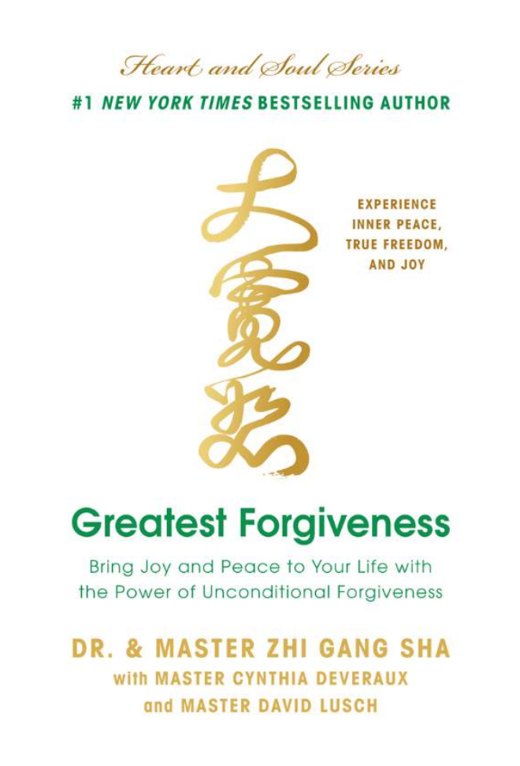
Greatest Love and Greatest Forgiveness are the first two of the Ten Da, and these two books by Dr. and Master Sha are where many of us began. They are simple, practical and written for beginners. Both are free: download them here, or from his official site.
Heart and Soul Series
Unblock Your Life in 30 Minutes a Day with the Power of Unconditional Love
What’s inside: 10 things to take away →
Download the free PDF ↓PDF · 0.7 MB · Also on Master Sha’s official app →
 Heart and Soul Series
Bring Joy and Peace to Your Life with the Power of Unconditional Forgiveness
What’s inside: 10 things to take away →
Download the free PDF ↓PDF · 1.5 MB · Also on Master Sha’s official app →
Not sure where to start? Here is what each book is about, the questions it answers, and the ideas most readers carry with them. It is a taste, not the whole meal: the practices, the calligraphy to trace and the stories are in the books themselves. New words along the way? See the glossary.
A pocket-sized book about Da Ai (pronounced dah eye), greatest love, which Master Sha describes as love without conditions. It explains why he sees love as the first of the Ten Da, then teaches a simple daily practice of chanting, tracing a Tao Calligraphy and asking for and offering forgiveness, for your health, your feelings, your relationships and the wider world. The subtitle promises 30 minutes a day.
Try it tonight: sit quietly with a hand on your heart, then chant “Da Ai, Da Ai” or “greatest love” for ten minutes, picturing warm golden light. The book walks you through every step.
Download Greatest Love, free ↓
A short, practical book about Da Kuan Shu (pronounced dah kwahn shoo), greatest forgiveness: forgiving completely, without conditions or expectations. Master Sha explains why he sees forgiveness as the key to life’s challenges, then gives one practice you can shape to the body, the emotions, relationships and work, with a Tao Calligraphy to trace. Readers from around the world share their stories in the last chapter.
Try it tonight: think of one person you are struggling to forgive, and slowly repeat the three-line mantra for ten minutes. Notice how you feel afterwards.
Download Greatest Forgiveness, free ↓Both books say their practices support, and never replace, care from a health professional. This is our own summary for newcomers; the books are © Heaven’s Library Publication Corp., published by BenBella Books.