Faith & practice

Whatever your faith, and curious? You are not alone.

If you hold a faith or a set of beliefs, it is natural to wonder whether Tao practice fits with them. Does this go against what I believe? Is it wrong for me to do this? Where is the line? Our community includes people of many beliefs. Most of us grew up Catholic or Christian, so the answers below speak to those questions most directly, with references you can check. Whatever your tradition, you are welcome to bring your questions, and your faith, with you.

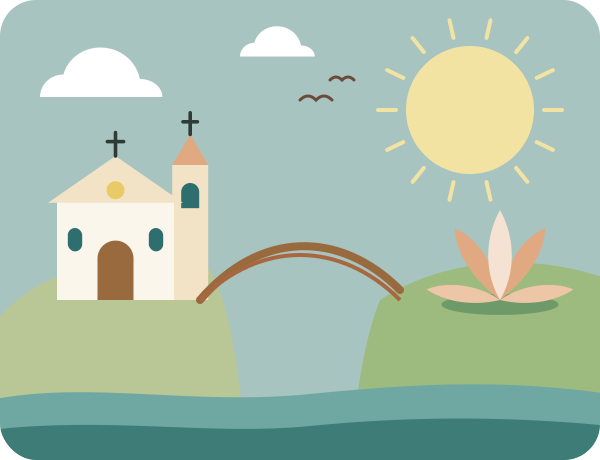
A Philippine church and a lotus under the sun, on two hills joined by a footbridge
A word before we begin. We are a community of practitioners, not the Church, and we cannot speak for it. We are not aware of any statement by the Catholic Church on Tao Hands or Master Sha’s teachings specifically. What follows is how Catholics in our community think this through, with numbered references so you can read the Church’s own words for yourself. For your own conscience, please talk with your parish priest or a spiritual director.

What the practice draws on. Master Sha’s teachings bring together traditional Chinese medicine and Tao wisdom about the universal laws. His official site describes him as “a Tao Grandmaster, trained in Western medicine and traditional Chinese medicine” (mastersha.com [1]); his publisher, Simon & Schuster, says he “was trained as a conventional medical doctor and a doctor of traditional Chinese medicine” (Simon & Schuster [2]); and his book Tao I describes Tao as “the principles and laws of all universes” (Tao I [3]). Below, we look at how these ideas sit alongside Christian faith.
The questions people ask

Honest answers, gently given

1

Does this go against my Catholic faith?

It doesn’t have to — but it depends on how you practice. The practice asks you to offer forgiveness, love, compassion and gratitude, and to pray for healing for yourself and others. None of that is foreign to the Gospel. Christians have prayed over the sick and laid hands on them since the time of the apostles (Mark 16:18 [4]; Acts 28:8 [5]; James 5:14–15 [6]).

What matters is to whom you pray and where you place your trust. Catholics in our community direct their prayer to God — Father, Son and Holy Spirit — and ask Mary and the saints to intercede, as they always have. God remains the source of every healing; the practitioner is only an instrument.

2

How can it not go against Church teaching?

The Second Vatican Council taught that the Church rejects nothing that is true and holy in other religions (Nostra Aetate, no. 2 [7]). On methods of prayer from the East, the Church says one can take from them what is useful so long as the Christian conception of prayer, its logic and requirements are never obscured (Orationis Formas, no. 16 [8]).

So the question is not “Is this from the East?” but “Does my practice keep God at the center?” Practices like breathing, stillness, chanting, forgiveness and gratitude can serve Christian prayer. Beliefs that would replace God — or treat healing as a power we control — cannot.

3

Am I committing a sin if I do Tao practices?

Only God sees the heart, and we will not judge yours. The Church teaches that we must follow a well-formed conscience (Catechism, nos. 1776–1802 [9]), and that mortal sin requires grave matter, full knowledge and deliberate consent (Catechism, no. 1857 [10]). Practicing with your prayer directed to God, for the good of others, is very different from seeking hidden powers.

If you are unsure, that unease is worth listening to. Bring it to Confession or to a spiritual director — that is the Catholic way of discernment. And you are always free to step back from anything that troubles your conscience. No one here will think less of you.

4

So where is the fine line?

The Church warns against superstition, divination and magic — especially practices of magic or sorcery, by which one attempts to tame occult powers, so as to place them at one’s service, even if this were for the sake of restoring their health (Catechism, no. 2117; see also nos. 2111 and 2116 [11]).

The line, then, is between praying to God for healing and trying to command a power apart from God. The side-by-side below is how Catholics in our community keep to the right side of it.

The fine line

Keeping God at the center

Within the line

  • Praying to God — Father, Son and Holy Spirit — and asking Mary, the angels and the saints to intercede
  • Seeing God as the source of all healing, and yourself as an instrument
  • Practicing forgiveness, love, compassion, humility, gratitude and service
  • Using cards, calligraphy or images as aids to prayer, the way Catholics use holy images
  • Reserving the word “soul” for human persons (Catechism, no. 366 [12]), and speaking of the “qi” or energy of things
  • Continuing Mass, Confession and Anointing of the Sick
  • Continuing your medical treatment and your doctor’s advice

Over the line

In fairness: Church bodies have urged caution about some energy-healing practices. In 2009 the U.S. bishops’ Committee on Doctrine concluded that Reiki finds no support in natural science or in Christian belief, and that it would be inappropriate for Catholic institutions to promote it, warning against superstition (USCCB, 2009 [13]). Tao practice is not Reiki, but the same concerns are worth taking seriously — which is exactly why we keep God at the center and encourage you to discern with a priest.
A Catholic’s reflection

Bridging Two Traditions

A personal essay by one of our members — a lifelong Catholic — written after his first practitioner weekend. Read it, or listen to two audio conversations about it below.

A Philippine church and a lotus under the sun, joined by a footbridge

Personal reflection · October 1, 2024

Bridging Two Traditions: A Catholic’s Journey into Tao Hands Practice

I. A new chapter in a lifelong faith journey

My Catholic faith has long been the bedrock of my spiritual life. From childhood, the Church was a constant presence — near enough to be part of my weekly rhythm through Sunday Mass, parish celebrations, and community gatherings. These experiences shaped not only my sense of belonging but also my early awareness of God’s presence in the ordinary moments of life.

As I matured, my faith deepened into intentional theological reflection. The Church became more than a familiar community; it was the custodian of a rich spiritual and intellectual tradition — grounded in Scripture, sustained by the sacraments, and illuminated by centuries of theological discourse. This foundation has shaped my worldview, informed my moral choices, and framed my understanding of both life’s blessings and trials.

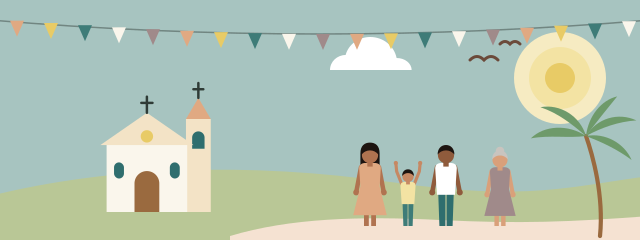
A family walking to a Philippine parish church on a Sunday morning under fiesta bunting

It was within this context of lived devotion and theological formation that I recently encountered Tao Hands practice. Just a month ago, I participated in a weekend Tao Hands practitioner class. The experience was both enlightening and thought-provoking, opening perspectives on spirituality and energy work I had never explored before.

Now, I stand at a crossroads. The philosophy and techniques of Tao Hands resonate deeply, offering potential for growth and healing. Yet, as a committed Catholic, I feel called to discern carefully — ensuring that this new practice enriches, rather than dilutes, the faith that has shaped my life.

Continue reading: parts II–VI

II. The cornerstone challenge: reconciling “soul” and “qi”

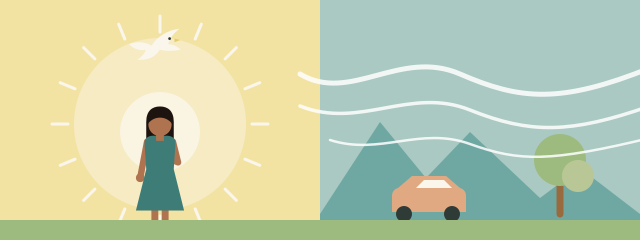
On one side, a woman with a hand on her heart in warm light beneath a dove; on the other, ribbons of energy flowing over a mountain, a tree and a car

A central question emerged quickly: How do I reconcile the Catholic concept of “soul” with the Taoist concept of “qi”? This is not simply semantics — it touches the core of anthropology, cosmology, and the nature of the divine–human relationship.

In Catholic theology, the soul (anima) is the immortal spiritual essence of each human being, created immediately by God and destined for eternal life. It is the principle of life for the body and the seat of intellect and will.

In Tao Hands, by contrast, qi refers to a universal life force or energy present in all living and non-living things. It is dynamic, flowing, and interconnected — concepts that do not map neatly onto Catholic anthropology.

To bridge the two without compromising Catholic doctrine, I have adopted a simple framework:

“Soul”

Reserved exclusively for the immortal, spiritual essence of human beings, as taught by the Catholic Church.

“Qi”

Used for the life force or energy of non-human entities, or the universal energetic field.

“Bless the soul of my car.” “Bless the qi of my car.”

For example, I would not say, “Bless the soul of my car,” which conflicts with Catholic teaching. Instead, I might say, “Bless the qi of my car.” This distinction preserves theological integrity, respects Taoist terminology and worldview, enables full participation in Tao Hands practice, and prevents cognitive dissonance in my spiritual life.

III. Broader questions and explorations

A signpost at a crossroads under the evening stars, with a traveler pausing to choose a way

While the “soul” and “qi” distinction forms a cornerstone of my integration efforts, it is not the only area where I am seeking harmony between my Catholic faith and Tao Hands practice:

Prayer and invocation

How do Catholic prayers and Tao Hands invocations complement or differ from each other?

Healing

Can sacramental healing and energy-based healing be integrated as complementary approaches?

Spiritual cosmology

How do Catholic and Taoist understandings of the spiritual realm align or diverge?

Ethics

Where do Tao Hands ethical teachings support Catholic moral principles, and where might tensions arise?

IV. Steps toward integration

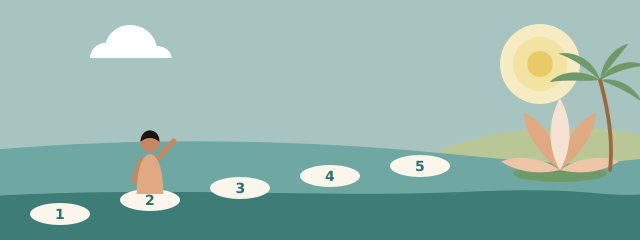
Five numbered stepping stones crossing a pond toward a lotus, with a person stepping from the first to the second
  1. Deepen my understanding. I will study both Catholic teachings and Tao Hands philosophy more deeply, seeking to understand their core principles and potential areas of alignment.
  2. Dialogue with spiritual guides. I plan to discuss my journey with my parish priest or a Catholic spiritual director, seeking guidance on how to approach this integration from a Catholic perspective.
  3. Mindful practice. As I engage in Tao Hands techniques, I will do so mindfully, always grounding my practice in my Catholic worldview and intentions.
  4. Reflect on experiences. I will keep a journal, noting how Tao Hands practice affects my spiritual life and whether it enhances or challenges my Catholic faith.
  5. Community and support. I will seek out others on similar journeys of integrating different spiritual practices, learning from their experiences and insights.

V. Practical applications in daily life

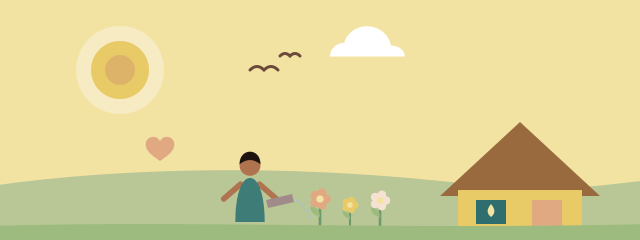
A morning at home: a person watering flowers outside a house with a candle lit in the window, the sun rising
In prayer and meditation

I maintain my Catholic prayer life while incorporating Tao Hands meditation techniques, finding that they can deepen my sense of connection to God and creation.

Interacting with nature

My Catholic stewardship of creation is enhanced by a new awareness of the energy flowing through all of nature.

Healing and wellness

I explore how Tao Hands energy work can complement my prayers for healing, seeing both as potential channels for God’s healing grace.

Community and relationships

I am learning to appreciate both the unique souls of individuals, in the Catholic sense, and the interconnected energy (qi) that flows between us all.

VI. Closing thoughts: a journey of faith and discovery

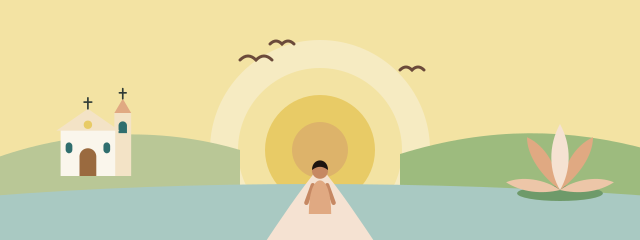
A path leading toward a rising sun between a church on one hill and a lotus on the other, with a traveler walking on

As I stand at the beginning of this journey, I am filled with a mix of excitement and cautious optimism. I believe this exploration has the potential to deepen my spiritual life and broaden my understanding of the divine.

I approach this integration not as a departure from my Catholic faith, but as a potential enrichment of it. My goal is to find a way to practice both Catholicism and Tao Hands that brings peace to my heart and aligns with my deepest spiritual convictions.

This journey will require patience, discernment, and an open heart. I trust that with sincere intention and guidance from both my Catholic faith and the insights of Tao Hands practice, I can find a harmonious path forward — always growing closer to God and to a fuller understanding of His creation.

About this reflection

This essay was first written by Rolly Maiquez, Ed.D. as personal ideas and notes, and later organized with the help of an AI writing assistant for a clearer presentation. The experiences, questions and insights are entirely his own. It is a personal reflection and a starting point in an ongoing journey — not spiritual advice or a doctrinal statement. Lightly edited for the web.

Listen

Two conversations about the essay

Two short audio discussions that walk through the essay’s questions in plain, everyday language — good for listening on a commute.

A jeepney in the city with a commuter listening on headphones
Part 1 · 7 min 52 s

Can Two Traditions Live Together?

Soul and qi, Shen and Jing, prayer and practice — and why it helps to ask hard questions and seek wise counsel.

Download Part 1 (MP3) ↓

Read the transcript

Ever try to fit, like, a square peg in a round hole? Kind of feels like that's what we're getting into today, right? This whole idea of how one person, how one man is trying to make these two, well, kind of different worlds work together. His Catholic faith, been a part of his life forever, and then this whole Tao Hands healing thing. Yeah, it's really fascinating. And what's kind of cool is that we get this inside look, right? We have Rolly Maiquez, and he put it all down in his essay, Bridging Two Traditions. You know that subtitle, A Catholic's Journey into Tao Hands Practice.

That pretty much sums it up. And he really goes there. It's not every day you get a peek inside someone's head like this, you know. He's asking those questions, like, straight up, can these two things even exist together? But for me, what I think is so interesting for us listening, it's like, even if we're not Catholic or into Taoism, what can we learn from this guy's experience? Exactly. It all boils down to how we deal with new stuff, especially if it kind of shakes up what we already believe, you know what I mean?

Okay, so let's just dive right in. Rolly, he starts with this question that's, like, at the heart of everything for him. Can he make the Catholic ideas about the soul and spirit, can he make those fit with the Taoist ideas? Shen, Qi, and Jing. And I'll be honest, I had to refresh myself on those Taoist terms. I don't know about you. Oh, for sure. I mean, think of Shen as like your highest self, that pure consciousness, the spirit. Qi, that's your life force, that energy. We've talked about that before, that vital spark, right?

It's flowing through everything, even like objects, not just people. Right, right. Okay, and Jing. Jing is your essence. It's like the foundation you're built on. Okay, that makes more sense. But here's the thing, Rolly, he's Catholic. Like, imagine spending your life with these beliefs, then you bump into these new concepts. Shen, pure consciousness, Qi, the energy and everything. Even like, I don't know, your coffee cup and Jing, that essential part of you. It's like, no wonder he's kind of tripping at it first. Would you feel the same way?

Absolutely. Yeah, and this is where Rolly, he gets really smart about it. Yeah. Instead of looking at him like two totally separate things, he starts trying to find that common ground. Like building a bridge. I like it. So how does he do? Does he just ditch all his Catholic stuff and go full on Taoism? Not even close. He finds these like clever workarounds. He maps those Taoist ideas onto what he already knows from Catholicism. So, for example, instead of ditching the whole soul thing, he looks at Qi, that life energy, and he sees it as God's creation, still happening all the time.

Okay, I'm starting to see it. It's like he's saying these ideas, they don't have to be totally at odds. Maybe they're just different ways of saying the same thing on a deeper level. Exactly. Yeah. And that's huge, right? Anyone trying to make sense of ideas that seem totally different, this is it. It's not about picking one or the other sometimes. Sometimes it's about finding that weird little connection, the spot where those different ideas can actually work together, you know, make each other stronger. So it's less about ditching what he knows and more about like adding to it, right?

Making it even, I don't know, deeper. It's like when you're cooking and you've got that recipe you love, but then you try something new, a new spice or something. Not a total overhaul, but it brings out these new flavors. That's kind of what Rolly is doing. Totally. And the thing is, he doesn't stop there. He digs even deeper into these other things he might hit on this path he's on, you know, try to bring these two traditions together. Because let's face it, it's probably not all going to be easy, right? Trying to merge these two big different ways of believing.

What kind of things is he talking about? Well, he talks about how he's trying to figure out the Taoist stuff, the techniques, and how they fit into what he's already doing. Like with prayer, right? You've got your way of praying, the way you've always done it. And then you start thinking, can I even do this? Can I bring these other ideas in, these Taoist things? Will that like make my prayer better? Or is it going to mess it all up? Whoa. Yeah, that's a big one. I can see how that'd make you question everything. It's like walking a tightrope or something.

For sure. And Rolly, he doesn't shy away from the hard questions. He even gets into like the critics of it all. Like does Taoism, does it go against his Catholic morals or do they work together? See, that's something I wouldn't even think about, but it makes sense. It's not just about the things you do. It's about your whole way of looking at the world, right? So what happens? Does he find any problems? Well, he doesn't get into like any big clashes, but he does say it's super important to listen to your gut, you know, your own moral compass, but also to be open to what other traditions say.

He talks a lot about talking to people, spiritual mentors from both sides, Catholic and Taoist, to get their take on things, to help him figure it out. That's kind of cool, actually. It's like he's got his own little council helping him navigate this whole new world. I like that he's going out there getting different points of view. Yeah. And that's something we can all learn from, you know, whatever we're trying to learn. Look for those different angles. Talk to people who see things differently and be OK with maybe having to rethink things.

It's not about having it all figured out right. It's about being up for whatever comes your way. I got to ask, though, does Rolly, does he talk about how this is all actually like playing out in his life? What's he getting out of this whole thing? Yeah. You know me. You got to bring it back to the practical stuff. What's he actually getting out of this whole thing? He does. He really does. And this is where it gets, I don't know, kind of exciting. He talks about actually using Tao Hands like in his prayer and how he sees nature totally differently now.

Even like healing. He's seen it through both these lenses now, Catholic and Taoist. It's wild. OK, now you've got my attention. Give me an example. How is he actually doing Tao Hands stuff while he's praying? So he talks about these visualizations and working with energy stuff he learned from Tao Hands and he's doing it all while he's doing his regular Catholic prayer. He says it's like this whole other level of connection, you know, with like the divine and everything. That's pretty amazing, honestly. Like he's not just praying.

He's like tapping into something bigger at the same time. Exactly. And this whole energy thing, that qi, remember, it's like changed how he sees nature, too. Yeah. He talks about feeling more connected to it all like this, this awe that maybe he didn't get before. It's like those Taoist ideas about how everything's connected. It's like they're making his world bigger, you know, more, I don't know, alive or something. You got it. And it's not just him like by himself either. It's affecting how he is with other people, too.

He feels like he's more tuned into them or, I don't know, empathetic or something. So he's holding on to that Catholic idea about seeing the good in everyone. But then he's got this Taoist view that we're all connected. It's like he's blending them to be more, I don't know, compassionate in the world. You nailed it. And that's what's so cool about Rolly's story. He's not just talking the talk, you know, he's living it. He's taking these two things that don't seem like they go together and he's making it work. And it's like really powerful.

It's like he's got this map, right? But not to one specific place, but to this journey he's on where he's always discovering new stuff. And like anyone can go on this journey. It's not just for him. What I'm taking away from all this is integration. It's not about like checking boxes and then you're done. It's about the whole journey, all the questions, the looking around, even the stuff that makes you uncomfortable. So true. And yeah, Rolly, this is his story, right? But it's like he's giving us this guidebook for anyone, whether you're trying to figure out your own beliefs or maybe you've got these ideas that clash.

Or even if you just want to find more meaning in your life, this is it. Yeah. And it reminds us we don't have to throw away what we already have to explore something new. Sometimes it's about finding those little bridges, those connections that show us how these different things, they might not be so different after all, you know? Totally. Totally. So if you're feeling a little stuck yourself, take a page from Rolly's book. Ask those tough questions, even if they make you uncomfortable. Talk to people who see things differently than you.

And I don't know, just be open to where it takes you. You never know what you'll find.
Part 2 · 7 min 15 s

Building the Bridge

God’s sustaining presence and qi, blessing “the qi of my car,” talking with a priest, and making peace with mystery.

Download Part 2 (MP3) ↓

Read the transcript

All right, buckle up, because this deep dive is going to be something else. We've got this document, and I swear, it's got fascinating stamped on every page. Oh, is this the one about... It's called Bridging Two Traditions, A Catholic's Journey into Tao Hands Practice by Rolly Maiquez. Okay, yeah, that one. And hold on, he's trying to bring, what, Taoism and Catholicism together? That's the one. And that's what I want to unpack with you. I'm intrigued. It's not every day you see someone trying to blend, well, those two in particular.

Right. It's like he's taking two totally different worlds and saying, what if they're not so different after all? Hmm. Yeah. And what's interesting is he's not ditching Catholicism to explore Taoism. Exactly. He's trying to find a way for them to, like, coexist. It's like he's saying, what if I could be both fully Catholic and fully engaged with Tao Hands practice? That's quite a journey. So where does he even begin? Well, he jumps right into the deep end, tackling the big question head on. Let me guess. How does he reconcile the soul, that core Catholic concept, with the Taoist ideas of Shen, Qi, and Jing?

You hit the nail on the head. That's the core tension he's wrestling with. It's like trying to blend oil and water, those two systems. So how does he even start to bring them together? Well, he starts by, uh, well, he doesn't. Not in the way you might think. OK, now you've got me curious. What's he doing then? He's sticking with the traditional soul idea from Catholicism. But get this. He starts drawing parallels between the Holy Spirit and Shen. Whoa, that's creative. So instead of trying to force them into the same box, he's finding, like, points of overlap.

Exactly. He's building a bridge, not trying to demolish one or the other. That's fascinating. I mean, are there even any established connections between those two concepts? That's what's so bold about it. Yeah. He's not relying on some preexisting framework. It's like he's saying, look, I see these similarities and I'm going to explore them. So he's creating his own interpretation, his own way of bridging those two traditions. Exactly. It's like he's saying, this is how it makes sense to me. I can see why he said this one was fascinating.

He's really going his own way with this. So what about Qi and Jing? Where did those fit in? He gets there. He connects Qi, that vital life force energy in Taoism, with the Catholic idea of God's sustaining power in the universe. OK, hold on. So he's seeing God's hand, so to speak, in the Taoist concept of Qi. That's how I read it. It's like he's finding a new way to understand God's constant presence, God's grace through the lens of Taoist thought. That's a really unique perspective. I'm curious to see where he goes with this.

And it's not all just heady concepts, you know, he brings it down to earth, makes it real, you know. Oh, yeah. He seems like a practical guy. He talks about blessing the Qi of his car. His car. OK, instead of blessing the what, the engine, the wheels? Instead of its soul, he's like, I'm blessing the Qi of this car. Now that's putting it into practice, right? I mean, who blesses their car's Qi? I know, right? It made me laugh. But it also made me think, this guy's serious about integrating these ideas into his life. Not just talking the talk, but walking the walk.

So how does he plan to actually bring all this together? He's got a plan, and it's actually pretty methodical. Oh, methodical. OK. Tell me more. What does he do? First off, he's not throwing out his Catholic faith. He wants to dive deeper into Catholic teachings. OK, so he's strengthening that foundation, I see. But at the same time, he also wants to study more Tao Hands philosophy. Like, he wants to understand both traditions on their own terms, you know. That makes sense. It's like wanting to really taste two different wines before you try to blend them, right?

Exactly. And he doesn't stop there. He's talking about going to his priest, maybe a spiritual director, you know, to talk it all through. Wise move. I mean, this is some deep stuff, right? Having a guide, someone to bounce ideas off of, that's invaluable. It reminds me of that saying, if you want to go fast, go alone. If you want to go far, go together. Yeah. He's in it for the long haul. He wants to build a bridge that's going to last, not just some temporary thing. So how does this actually play out in his daily life?

What does this integration look like? Well, he starts with something very familiar. Prayer. OK, so he's sticking with his Catholic roots there. But he also wants to bring in Tao Hands meditation techniques. He's not replacing one with the other, but he's trying to find ways to do both. That's interesting, isn't it? I mean, they both emphasize stillness, inner peace, right? But they come at it from different angles. And it's not just about what he's doing internally, but how he sees the world around him. Oh, right. He talks about connecting with nature.

Exactly. But now he's got this awareness of chi, this life force energy flowing through everything. It's like seeing the world with new eyes. Like someone just gave you these incredible glasses and suddenly you're like, wow, I never noticed that before. He even talks about how this impacts his relationships. Oh, how so? That's interesting. He's seeing that connection, that shared energy with everyone. It's like expanding his sense of community beyond just his faith. It's like he's saying we're all connected, you know, on some level.

But there's this one part at the end that really stuck with me. Oh, yeah. What's that? He talks about this whole journey, this whole process as resolving cognitive dissonance. And it got me thinking, like, does it always have to be about resolving that dissonance? That's an interesting question. I mean, it's natural to want things to make sense, right? To have that consistency in our beliefs. Right. And when we encounter something that challenges those beliefs, it's like, whoa, hold on. Something's not computing here.

Exactly. That's the dissonance kicking in. It can be uncomfortable, that feeling of things not quite lining up. And Rolly, he's finding ways to make those connections. Like with the Holy Spirit and Shen or Qi and God's creation. He seems to be finding a sense of peace, of resolution. He's finding a way to harmonize those different parts of himself, his beliefs. But you got me thinking, what if we don't always need that perfect resolution? You mean, what if there's room for some of that dissonance? Exactly. What if it's okay to hold those seemingly contradictory beliefs, those different perspectives, without needing to force them into a neat little box?

It's like that saying, life is a journey, not a destination. Maybe it's the same with our beliefs. Maybe it's about embracing the mystery, the complexity, you know? Absolutely. It's like those optical illusions where you can see two different images depending on how you look at it. Maybe there's not always one right way to see things. And maybe that's okay. Maybe that's where the real growth happens, in that space of uncertainty, of holding those different possibilities. You know, at the end of the day, what I find so inspiring about Rolly is his willingness to ask the big questions.

He's not afraid to go there. He's not afraid to step outside his comfort zone, explore those different traditions. And he's doing it all while staying true to himself. That's the key. It's a good reminder for all of us, right? You don't need to have all the answers. Just be open to asking the questions. And who knows? You might be surprised at what you discover along the way. Well, that's our deep dive for today. Thanks for exploring these fascinating ideas with us. And hey, maybe this will spark some of your own questions, your own journeys of discovery.

Until next time.

Audio conversations based on the essay Bridging Two Traditions by Rolly Maiquez, Ed.D. They are informal and sometimes simplify or go beyond the essay. Where they differ, the essay — and the Church’s own teaching — are the better guide. Transcripts are machine-generated and lightly corrected.

Read for yourself

References

  1. Dr. and Master Zhi Gang Sha, official site (mastersha.com). Describes him as “a Tao Grandmaster, trained in Western medicine and traditional Chinese medicine.” mastersha.com →
  2. Simon & Schuster, author page for Zhi Gang Sha (accessed October 29, 2026). “He was trained as a conventional medical doctor and a doctor of traditional Chinese medicine.” simonandschuster.com →
  3. Zhi Gang Sha, Tao I: The Way of All Life (Atria Books, 2010), publisher’s description. “Tao is the source of all universes. Tao is the principles and laws of all universes.” books.apple.com →
  4. Mark 16:18 (New American Bible). “They will lay hands on the sick, and they will recover.” www.vatican.va →
  5. Acts 28:8 (New American Bible). Paul prays, lays his hands on the father of Publius, and heals him. www.vatican.va →
  6. James 5:14–15 (New American Bible). The presbyters pray over the sick and anoint them with oil in the name of the Lord. www.vatican.va →
  7. Second Vatican Council, Nostra Aetate (1965), no. 2. Declaration on the relation of the Church to non-Christian religions. www.vatican.va →
  8. Congregation for the Doctrine of the Faith, Orationis Formas (1989), no. 16. Letter to the bishops on some aspects of Christian meditation, including methods from the East. www.vatican.va →
  9. Catechism of the Catholic Church, nos. 1776–1802. Moral conscience: its judgment, its formation, and choosing in accord with it. www.vatican.va →
  10. Catechism of the Catholic Church, no. 1857. The three conditions for mortal sin: grave matter, full knowledge and deliberate consent. www.vatican.va →
  11. Catechism of the Catholic Church, nos. 2111, 2116 and 2117. Superstition (2111), divination (2116), and magic and sorcery (2117). www.vatican.va →
  12. Catechism of the Catholic Church, no. 366. Every spiritual soul is created immediately by God and is immortal. www.vatican.va →
  13. U.S. Conference of Catholic Bishops, Committee on Doctrine, Guidelines for Evaluating Reiki as an Alternative Therapy (March 25, 2009). A caution on an energy-healing practice; see the conclusion, nos. 10–12. www.usccb.org →

Every link above opens the source itself: the Vatican’s own website for the Council, the Catechism and the Bible (New American Bible), the U.S. bishops’ website for their 2009 guidelines, Master Sha’s official site, his publisher’s author page, and the publisher’s description of his book. Quoted words are taken directly from those pages.

Still wondering?Talk with your parish priest — and, if you like, with one of our guides.
Meet the guides